


When it comes to motorcycle safety, the braking system stands as one of the most critical components. A well - matched brake master cylinder and calipers are essential for optimal braking performance. As a supplier of Motorbike Brake Master Cylinders, I've witnessed firsthand the importance of compatibility in this crucial pairing. In this blog, I'll delve into the key compatibility issues that should be considered when matching a brake master cylinder with calipers.
1. Bore Size Compatibility
The bore size of the brake master cylinder is a fundamental factor in the braking system. The bore size determines the amount of fluid displacement per stroke of the brake lever. A larger bore size means more fluid is displaced with each lever movement, which can result in a more forceful application of the calipers. However, it also requires more lever force to operate.
Conversely, a smaller bore size displaces less fluid, requiring less lever force but potentially reducing the overall braking power. When matching a master cylinder to calipers, it's crucial to consider the caliper's piston area. A larger piston area in the calipers will need a master cylinder with a larger bore size to generate sufficient pressure for effective braking. For example, high - performance calipers with multiple large pistons demand a master cylinder with a larger bore to ensure they can clamp down on the brake pads forcefully.
If the bore size of the master cylinder is too small for the calipers, the braking response will be sluggish, and it may take excessive lever travel to achieve adequate braking force. On the other hand, if the bore size is too large, the lever feel may be too stiff, and it could be challenging to modulate the braking force precisely. As a Motorbike Brake Master Cylinder supplier, we offer a range of bore sizes to match different caliper specifications. You can explore our Motorcycle Brake Lever And Master Cylinder options to find the right bore size for your calipers.
2. Fluid Volume and Flow Rate
The fluid volume capacity and flow rate of the master cylinder are also vital for compatibility with calipers. The master cylinder must be able to supply an adequate volume of brake fluid to the calipers quickly. When the brake lever is pulled, the master cylinder needs to displace enough fluid to fill the caliper's pistons and create the necessary pressure for braking.
If the master cylinder cannot provide enough fluid volume or has a low flow rate, the calipers may not reach their full clamping force, leading to reduced braking performance. This can be particularly problematic during high - speed or emergency braking situations. The design of the master cylinder, including the internal passages and the type of piston seal, can affect the fluid flow rate.
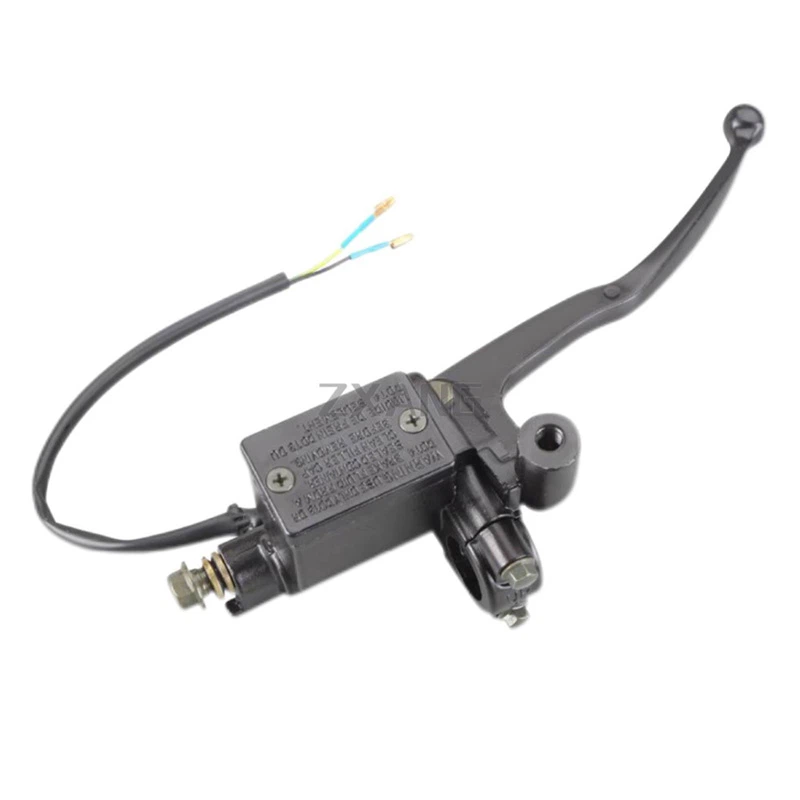
We understand the importance of proper fluid volume and flow rate in our Motorbike Brake Master Cylinders. Our Motorcycle Master Cylinder ZX - 1050 is engineered to ensure a smooth and efficient flow of brake fluid to the calipers, providing reliable braking performance.
3. Pressure Compatibility
The pressure generated by the master cylinder must be compatible with the calipers' pressure - handling capabilities. Each caliper has a maximum pressure limit that it can withstand without damage. If the master cylinder generates too much pressure, it can cause the caliper seals to fail, leading to fluid leaks and a loss of braking power.
On the other hand, if the pressure is too low, the calipers may not be able to apply enough force to the brake pads, resulting in ineffective braking. The pressure generated by the master cylinder is determined by the bore size, the lever ratio, and the force applied to the brake lever. It's essential to choose a master cylinder that can generate the appropriate pressure for the specific calipers.
Our Motorcycle Brake Master is designed to produce a consistent and appropriate pressure for a wide range of calipers. We conduct rigorous testing to ensure that our master cylinders meet the pressure requirements of different caliper models.
4. Mounting and Connection Compatibility
Physical compatibility is also a significant consideration. The master cylinder must be able to mount properly on the motorcycle's handlebars or frame, and it should have the correct connection points to the calipers. The mounting brackets and the size and shape of the master cylinder must match the available space on the motorcycle.
The connection between the master cylinder and the calipers is typically made through brake lines. The master cylinder should have the appropriate ports and fittings to connect to the brake lines, and the brake lines should be of the correct length and diameter to ensure a proper fluid connection. If the mounting or connection is not compatible, it can lead to installation difficulties, fluid leaks, and compromised braking performance.
We offer a variety of master cylinders with different mounting options and connection fittings to ensure compatibility with various motorcycle models and caliper setups. Our technical support team can assist you in choosing the right master cylinder based on your motorcycle's mounting requirements and caliper connections.
5. Lever Ratio and Ergonomics
The lever ratio of the master cylinder, which is the ratio of the distance from the pivot point to the point where the force is applied on the lever to the distance from the pivot point to the piston in the master cylinder, affects the amount of force required to operate the brakes. A higher lever ratio means less force is needed on the brake lever, but it may also result in longer lever travel.
Ergonomics also play a role in the compatibility between the master cylinder and the rider. The position and feel of the brake lever should be comfortable for the rider to operate. If the lever ratio is not well - matched to the calipers and the rider's preferences, it can lead to fatigue during long rides and make it difficult to control the braking force precisely.
We take into account the lever ratio and ergonomics in the design of our Motorbike Brake Master Cylinders. Our products are designed to provide a comfortable and efficient braking experience, allowing riders to have better control over their motorcycles.
Contact for Purchase and Consultation
In conclusion, matching a brake master cylinder with calipers requires careful consideration of multiple compatibility issues, including bore size, fluid volume and flow rate, pressure, mounting and connection, and lever ratio. As a Motorbike Brake Master Cylinder supplier, we are committed to providing high - quality products that meet these compatibility requirements.

If you are in the market for a new brake master cylinder or need advice on matching it with your calipers, we invite you to contact us for a purchase consultation. Our team of experts can help you select the right master cylinder for your specific needs and ensure a seamless installation.
References
- Motorcycle Brake System Design and Analysis, SAE International Publications
- Brake Handbook, Chilton's Automotive Book
- Technical Papers on Motorcycle Braking Performance, International Motorcycle Manufacturers Association


