


Hey there, fellow motorcycle enthusiasts! As a supplier of brake pumps for motorcycles, I've seen firsthand the importance of a well - functioning hydraulic brake pump. Today, I'm gonna break down how a hydraulic brake pump on a motorcycle works, so you can have a better understanding of this crucial component.
Let's start with the basics. A hydraulic brake pump is a key part of a motorcycle's braking system. Its main job is to convert the mechanical force you apply when you squeeze the brake lever or press the brake pedal into hydraulic pressure, which then gets transferred to the brake calipers to slow down or stop the wheels.
The Anatomy of a Hydraulic Brake Pump
The hydraulic brake pump, also known as the master cylinder, has several important parts. First up, there's the reservoir. This is where the brake fluid is stored. You've gotta keep an eye on the fluid level in the reservoir because if it gets too low, your brakes might not work as well.
Next, we have the piston. When you squeeze the brake lever, it pushes the piston inside the master cylinder. The piston is a tight - fitting cylinder that moves back and forth in the master cylinder bore. It's usually made of metal and has rubber seals around it to prevent the brake fluid from leaking out.
There's also the pushrod. The pushrod connects the brake lever to the piston. When you pull the brake lever, the pushrod transfers that force to the piston, making it move.
How It All Works
When you're cruising on your bike and need to stop, you reach for the brake lever. As you squeeze the lever, it pivots around a point and pushes the pushrod. The pushrod then moves the piston inside the master cylinder.

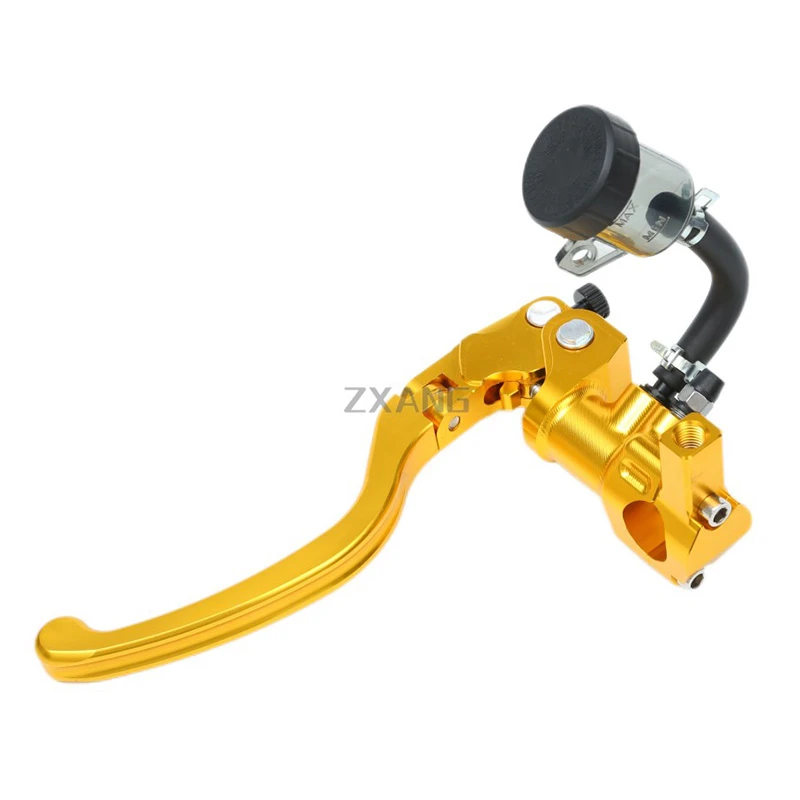
The master cylinder is filled with brake fluid. Brake fluid is a special type of liquid that doesn't compress easily. When the piston moves forward, it compresses the brake fluid in the master cylinder. Since the fluid can't be compressed much, the pressure builds up quickly.
This high - pressure brake fluid then travels through the brake lines. These are usually made of metal or high - strength rubber and are designed to withstand the high pressure. The brake lines connect the master cylinder to the brake calipers at the wheels.
At the brake calipers, the high - pressure brake fluid enters and pushes against pistons in the caliper. These pistons then squeeze the brake pads against the brake rotor. The friction between the brake pads and the rotor is what slows down the wheel and eventually stops your motorcycle.
Once you release the brake lever, the piston in the master cylinder moves back to its original position. The pressure in the brake lines drops, and the pistons in the caliper retract slightly, releasing the brake pads from the rotor. This allows the wheel to spin freely again.
Why Hydraulic Brakes Are Great
One of the biggest advantages of hydraulic brakes is their efficiency. Because the brake fluid transfers the force so well, you don't need to apply a whole lot of force on the brake lever to get a strong braking effect. This makes it easier for riders, especially those with less upper - body strength.
Hydraulic brakes are also more consistent than mechanical brakes. They're less affected by things like cable stretch or wear and tear on cables. This means that your braking performance stays more reliable over time.
Another plus is that hydraulic brakes can be designed to fit different types of motorcycles. Whether you've got a sportbike, a cruiser, or an off - road bike, there are hydraulic brake pumps available to suit your needs.
Our Products
As a brake pump motorcycle supplier, we offer a range of high - quality products. For example, we have the Motorbike Front Brake Master Cylinder ZX - 1021. This master cylinder is designed to provide smooth and reliable braking performance for the front wheel of your motorcycle. It's made with high - quality materials and has been tested to ensure it meets the highest standards.
We also have the Motorcycle Master Cylinder ZX - 1059. This is a great option for those looking for a durable and efficient master cylinder. It's built to last and can handle the demands of regular riding.
And then there's the Motorcycle Master ZX - 1030. This product is known for its excellent braking power and precision. It's a popular choice among motorcycle enthusiasts who want the best performance from their braking system.
Maintaining Your Hydraulic Brake Pump
To keep your hydraulic brake pump working properly, you need to do some regular maintenance. First, check the brake fluid level in the reservoir regularly. If it's low, add the recommended type of brake fluid. Make sure to use the right fluid because different motorcycles may require different types.
Inspect the brake lines for any signs of damage, like cracks or leaks. If you notice any issues, replace the brake lines right away. You should also check the brake pads for wear. If they're too thin, it's time to replace them.
Finally, have your braking system serviced by a professional mechanic at least once a year. They can check the entire system, bleed the brakes if necessary, and make sure everything is in top - notch condition.
Wrapping Up
So, there you have it! That's how a hydraulic brake pump on a motorcycle works. It's a simple yet incredibly important system that keeps you safe on the road. If you're in the market for a new brake pump or just want to upgrade your current one, we've got you covered with our high - quality products.
If you're interested in learning more about our products or have any questions, feel free to reach out. We're always happy to help you find the right brake pump for your motorcycle. Whether you're a professional racer or just a weekend rider, having a reliable braking system is essential. Contact us to start the procurement process and discuss how we can meet your specific needs.
References
- Motorcycle Mechanics Handbook, 3rd Edition
- The Complete Guide to Motorcycle Maintenance


