


Hey there, fellow motorcycle enthusiasts! As a supplier of brake cylinders for motorcycles, I've seen firsthand how crucial the interaction between the brake cylinder and the brake caliper is for a safe and smooth ride. In this blog post, I'm going to break down how these two components work together and why it's so important to have a good understanding of their interaction.
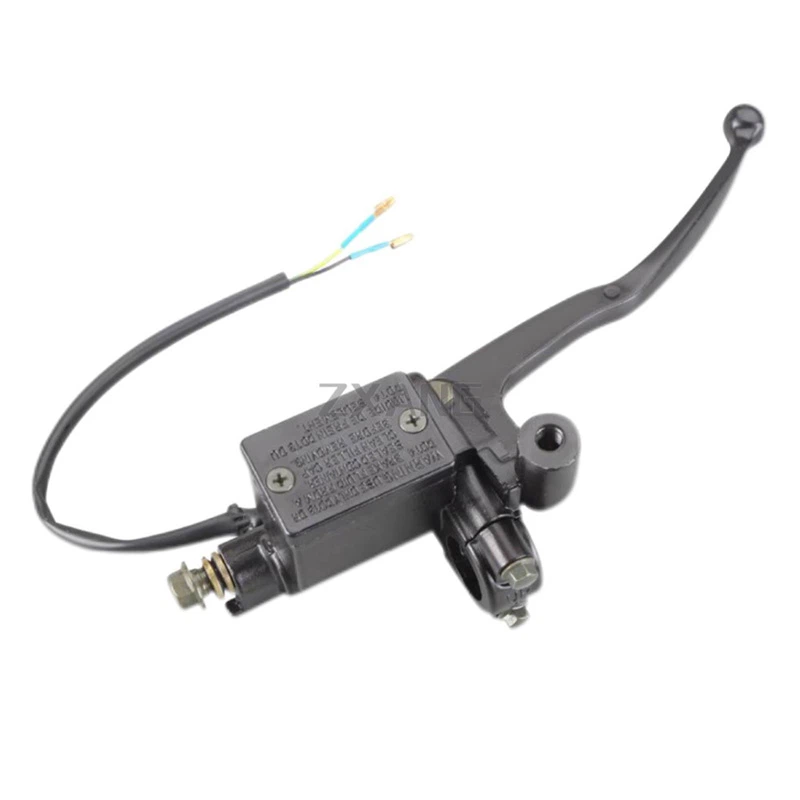
Let's start with the basics. The brake cylinder, also known as the master cylinder, is the part of the braking system that generates hydraulic pressure. When you squeeze the brake lever on your motorcycle, it pushes a piston inside the brake cylinder. This piston then compresses the brake fluid, which is usually a special type of hydraulic fluid designed to withstand high pressures and temperatures.
The compressed brake fluid is then forced through a series of brake lines to the brake caliper. The brake caliper is the part of the braking system that actually applies the brakes to the motorcycle's wheels. It contains one or more pistons that are activated by the hydraulic pressure from the brake cylinder. When the pistons in the brake caliper are pushed out, they squeeze the brake pads against the brake rotor, which is a large, flat disc attached to the wheel. This creates friction, which slows down the rotation of the wheel and ultimately stops the motorcycle.
Now, let's take a closer look at how the brake cylinder and the brake caliper interact. When you squeeze the brake lever, the piston in the brake cylinder moves forward, compressing the brake fluid. This increase in pressure is transmitted through the brake lines to the pistons in the brake caliper. The pistons in the brake caliper then move outwards, pushing the brake pads against the brake rotor.
The amount of force applied to the brake pads depends on the amount of pressure generated by the brake cylinder. This pressure is determined by several factors, including the size of the piston in the brake cylinder, the ratio of the brake lever, and the amount of force you apply to the brake lever. A larger piston in the brake cylinder will generate more pressure, which means more force will be applied to the brake pads. Similarly, a higher ratio brake lever will require less force from your hand to generate the same amount of pressure in the brake cylinder.
It's important to note that the interaction between the brake cylinder and the brake caliper is not always a one-way street. In some cases, the brake caliper can also affect the performance of the brake cylinder. For example, if the brake caliper is sticking or not releasing properly, it can cause the brake fluid to remain under pressure even after you release the brake lever. This can lead to overheating of the brake fluid and the brake components, which can ultimately result in brake failure.

To ensure that your motorcycle's braking system is working properly, it's important to have it inspected and maintained regularly. This includes checking the brake fluid level, inspecting the brake lines for leaks or damage, and ensuring that the brake caliper is functioning correctly. If you notice any problems with your brakes, such as a spongy brake lever, a pulling sensation when braking, or a grinding noise, it's important to have them checked out by a qualified mechanic as soon as possible.
At our company, we offer a wide range of high-quality brake cylinders for motorcycles. Our Motorcycle Master Cylinder ZX-1061 is a popular choice among motorcycle enthusiasts. It's designed to provide reliable and consistent performance, and it's compatible with a variety of motorcycle models. We also offer the Motorcycle Brake Lever And Master Cylinder, which is a complete kit that includes both the brake lever and the master cylinder. This makes it easy to upgrade your motorcycle's braking system without having to source individual components. And if you're looking for a universal solution, our Universal Motorcycle Brake Master Cylinder is a great option. It's designed to fit a wide range of motorcycle models, making it a versatile choice for any rider.
If you're in the market for a new brake cylinder for your motorcycle, or if you have any questions about how the brake cylinder and the brake caliper interact, please don't hesitate to contact us. We're here to help you find the right solution for your needs, and we're committed to providing you with the highest level of customer service. Whether you're a professional mechanic or a DIY enthusiast, we have the products and expertise to help you get the job done right.
In conclusion, the interaction between the brake cylinder and the brake caliper is a critical part of your motorcycle's braking system. Understanding how these two components work together can help you ensure that your brakes are working properly and that you're riding safely. By choosing high-quality brake components and having them installed and maintained by a qualified professional, you can enjoy a smooth and reliable ride every time you hit the road. So, what are you waiting for? Contact us today to learn more about our brake cylinders and how they can improve the performance of your motorcycle.
References:
- Motorcycle Mechanics Handbook
- Motorcycle Braking Systems: A Technical Guide


