


Hey there, fellow motorcycle enthusiasts! As a supplier of Motorcycle Clutch Master Cylinders, I've seen my fair share of clutch - related issues. One question that often pops up is, "Can a damaged motorcycle clutch master cylinder reservoir affect the clutch operation?" Well, let's dive right in and find out.
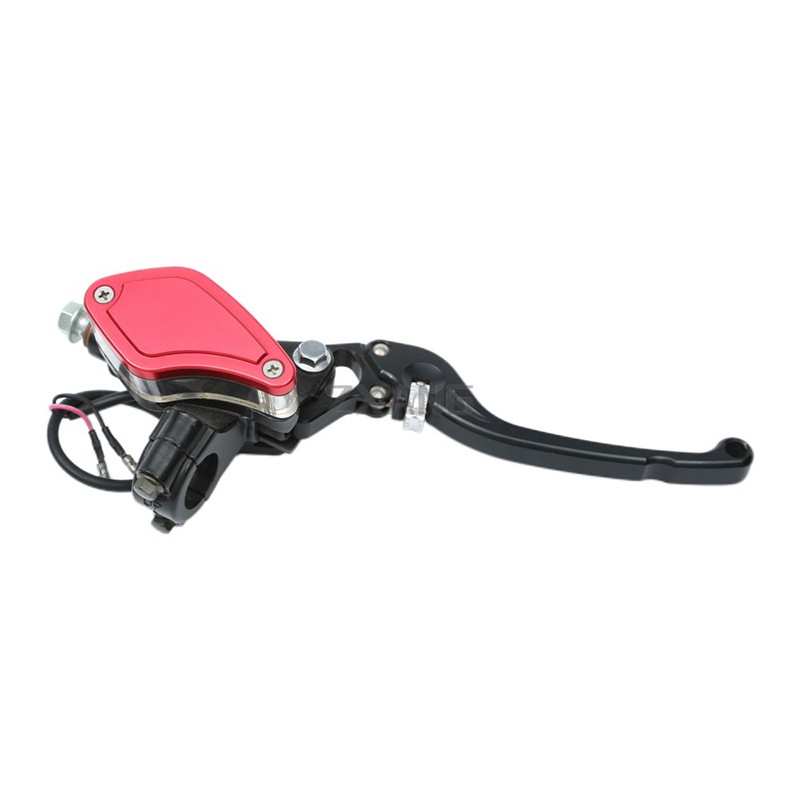
First off, let's understand what a clutch master cylinder reservoir is and what it does. The clutch master cylinder reservoir is like a little storage tank for the clutch fluid. It's connected to the clutch master cylinder, which is responsible for converting the pressure you apply on the clutch lever into hydraulic pressure. This hydraulic pressure then gets transferred to the clutch slave cylinder, which ultimately engages or disengages the clutch.
Now, if the reservoir gets damaged, several things can go wrong. One of the most obvious problems is fluid leakage. A crack or a hole in the reservoir can cause the clutch fluid to leak out. And without an adequate amount of fluid, the hydraulic system won't work as it should. You see, the fluid is the medium through which the pressure is transmitted. If there's not enough fluid, the pressure won't build up properly, and you might find it difficult to disengage the clutch. You could end up with a clutch that slips, or it might be really hard to shift gears.
Another issue that can arise from a damaged reservoir is air getting into the system. When the fluid level drops due to leakage, air can seep in. Air is compressible, unlike the clutch fluid. So, when you pull the clutch lever, instead of all the pressure being transferred to the slave cylinder, some of it is used to compress the air bubbles in the system. This results in a spongy feeling when you pull the clutch lever. You might notice that the lever has to be pulled much further than usual to disengage the clutch, and the clutch action becomes less responsive.
Let's talk about how a damaged reservoir can impact the long - term performance of the clutch. If the clutch isn't disengaging properly because of the issues caused by the damaged reservoir, it can lead to excessive wear on the clutch plates. The clutch plates are designed to engage and disengage smoothly. But when the system isn't working right, they can rub against each other even when they're supposed to be separated. This friction generates heat, which can cause the clutch plates to warp or burn out over time. Once the clutch plates are damaged, you're looking at a much more expensive repair.
Now, as a Motorcycle Clutch Master Cylinder supplier, I know how important it is to have a reliable clutch system. That's why we offer high - quality products that are built to last. If you're in the market for a new clutch master cylinder or related parts, you might want to check out some of our top - notch products. For instance, the Best Motorcycle Brake Master Cylinder is a great option for those looking for a high - performance master cylinder. It's designed to provide smooth and consistent operation, which is crucial for a good clutch performance.
Another product worth considering is the Brake Cylinder Motorcycle. This cylinder is built with precision and durability in mind. It can handle the high pressures of the hydraulic system, ensuring that your clutch operates flawlessly. And if you're looking for a specific model, the Motorcycle Master Cylinder ZX - 1058 is a popular choice among riders. It's engineered to fit a wide range of motorcycle models and offers excellent performance.
So, how can you tell if your clutch master cylinder reservoir is damaged? Well, the first sign is usually a low fluid level in the reservoir. If you notice that you're constantly having to top up the clutch fluid, there's a good chance that there's a leak. You can also visually inspect the reservoir for cracks or signs of damage. If you see any fluid dripping from the reservoir or around it, that's a clear indication that something's wrong. And of course, if you're experiencing problems with the clutch operation, like a spongy lever or difficulty shifting gears, it's worth checking the reservoir.
If you do find that your reservoir is damaged, it's important to replace it as soon as possible. You don't want to risk further damage to the clutch system. And when you're replacing the reservoir, make sure to bleed the hydraulic system properly. Bleeding the system gets rid of any air bubbles that might have gotten in, ensuring that the system works as it should.
In conclusion, a damaged motorcycle clutch master cylinder reservoir can definitely have a significant impact on the clutch operation. It can cause fluid leakage, air to enter the system, and lead to long - term damage to the clutch plates. But with the right products and proper maintenance, you can keep your clutch system in top shape.
If you're interested in purchasing high - quality Motorcycle Clutch Master Cylinders or related parts, don't hesitate to reach out. We're here to help you find the perfect solution for your motorcycle. Whether you're a casual rider or a professional racer, we've got the products to meet your needs. Contact us today to start the procurement discussion and get your hands on the best clutch components in the market.

References
- Motorcycle Hydraulic Systems Handbook
- Clutch Maintenance and Repair Guide for Motorcycles


